THE LIVING EARTH FOUNDATION

THE LIVING EARTH FOUNDATIONTHE LIVING EARTH FOUNDATIONTHE LIVING EARTH FOUNDATION

THE LIVING EARTH FOUNDATION

THE LIVING EARTH FOUNDATIONTHE LIVING EARTH FOUNDATIONTHE LIVING EARTH FOUNDATION
  • Home
  • PROJECTS
  • MEDIA
  • FAQs
  • ABOUT US
  • CONTACT
  • More
    • Home
    • PROJECTS
    • MEDIA
    • FAQs
    • ABOUT US
    • CONTACT
  • Home
  • PROJECTS
  • MEDIA
  • FAQs
  • ABOUT US
  • CONTACT

(805) 770-7630

THE LIVING EARTH FOUNDATION

THE LIVING EARTH FOUNDATIONTHE LIVING EARTH FOUNDATIONTHE LIVING EARTH FOUNDATION

Healing the Planet from the Ground Up!

The Living Earth Founding Mission

The Living Earth Foundation is a 501c3 nonprofit research and educational organization that is

dedicated to pioneering the frontiers of agroecology. Our mission is to transition agriculture from

chemical dependency toward resilient, nature-based models that deliver higher nutrient density

while fostering healthier environments for growers, communities, and ecosystems. Traditional

regenerative transitions typically require a 3-to-5-year window. Breakthroughs in biological

soil regeneration are now possible by combining new specialized bioremediation systems

with high-efficiency agroecological practices.  These advancements are dramatically

reducing the timeline shift with measurable yield increases within the FIRST YEAR!  

Living Earth Examples of Rapid Soil Regeneration in the First Year!

1/3

RESTORING NATURE'S REGENERATIVE BALANCE

THE PROBLEM

     Industrialized agriculture is currently recognized as the single largest driver of environmental change worldwide. It dominates the Earth's surface more than any human activity, covering roughly 37% of the planet's total land area:  

  • Biodiversity Loss: Agriculture is the leading cause of species extinction and habitat destruction worldwide, primarily through the conversion of forests and grasslands into farmland.
  • Water Usage and Pollution: It accounts for 70% to 85% of global fresh-water use. Additionally, chemical fertilizer runoff is the primary cause of "dead zones" in coastal oceans and 78% of waterway eutrophication leading to the excessive growth of toxic "red tide" algae blooms.
  • Climate Change: The entire food system is responsible for roughly one- third of global greenhouse gas emissions. Industrial livestock farming alone contributes an estimated 20% of annual global emissions.
  • Deforestation: Agriculture is responsible for approximately 80% of global deforestation, as vast tracts of land are cleared for grazing or to grow feed crops like soy and corn. 

THE CHALLENGE

     SUICIDE RATES for agrochemical farmers are one of the high­est in the nation. The extreme stress generated by modern industrial agriculture is driven by combina­tions of economic, occupational, and social factors:

  • Financial Pressure: Heavy debt from high input costs—such as synthetic fertilizers, pesti­cides, and patented seeds—coupled with unpredictable commodity prices can lead to catastrophic financial hardships and instability.
  • Environmental Volatility: Unpredictable weather events such as floods, droughts, and invasive pests can destroy a season's work in days.
  • Isolation and Stigma: Physical isolation in rural areas, combined with a cultural stigma against admitting “weakness” or seeking mental health treatment, often prevents farmers from getting help.
  • Loss of Legacy: The intense pressure to preserve multi-generational family farms adds a layer of personal burden, where failure is seen as a betrayal of ancestry.      

THE OPPORTUNITY

     Regenerative agricutural practices offer a prom­ising path to improving both the productivity of the farm and the wellbeing of the farmer:

  • Economic Relief: By transitioning away from expensive agrochemical inputs, farmers can drastically reduce overhead and achieve greater financial independence.
  • Increased Resilience: Healthier soil with higher organic matter can hold significantly more water, making farms much more resilient to drought and floods.
  • Mental Wellbeing: Studies show that regenerative farmers often report higher job satis­faction and a greater sense of purpose. Working in harmony with nature rather than fighting against it can lead to improved self-efficacy and confidence.
  • Physical Health: Reducing reliance on toxic agrochemicals lowers a farmer's direct expo­sure to substances linked to chronic illnesses, depression, and anxiety. 

THE MEANS     

       Sterile, chemically dependent soil acts as a biological vacuum. Without a diverse community of beneficial microbes to provide natural competition, pathogens can arrive and spread unchecked. Our regenerative protocols re-establish the soil’s natural pro­biotic “immune system” through two critical mechanisms:

  • Restoring the Soil-to-Gut Biome: Agrochemical farming has removed the beneficial ‘probiotic microbes’ that have histori­cally strengthened the human immune system, directly correlating with the multi-decade rise in chronic illnesses since their toxic introduction. 
  • Competitive Exclusion: By populating the soil with a diverse microbial workforce, we ensure that beneficial organisms occupy every available ecological niche. This transition creates a naturally disease-resistant environment that stabilizes yields and restores long-term profitability. Widespread adoption of these regenerative systems will drive a systemic shift toward nutrient-dense, nature-based foods – effectively displacing outdated, chemical-dependent practices.  


THE LIVESTOCK IMPERATIVE

     Utilizing advanced bioremediation protocols, we deploy special­ized microbes to rapidly detoxify degraded soil and revitalize livestock environments:
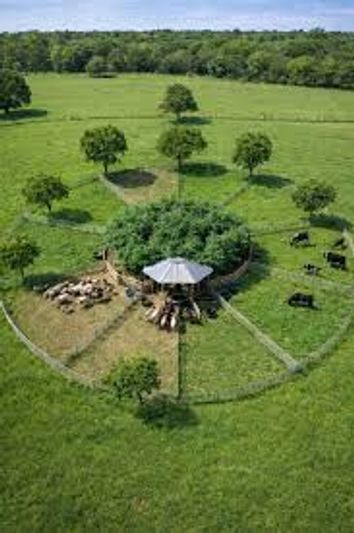
  • Rotational grazing acts as a natural restorative process for the land ensuring a more even distribution of manure across the pasture, returning vital nutrients to the soil without synthetic fertilizers.
  • Waste Transformation: We provide onsite detox and compost recycling of manure, turn­ing high-odor waste into nutrient-rich biological amendments.
  • Livestock Resilience: Our protocols detoxify and deodorize living environments while providing probiotic, nutrient-dense organic feedstocks that improve animal health and reduce methane output.
  • Climate Impact: By optimizing grassland rotations and waste processing, we dramatically reduce greenhouse gas emissions and eliminate the odor issues that currently plague live­stock opera­tions.

THE ONSITE EXPERT TECHNICIANS     

      Our scientific foundation is anchored by a strategic partnership with the Soil Food Web School, founded by the renouned soil scientist, Dr. Elaine Ingham. This alliance enables us to provide expert onsite mentorships while leveraging a global network of regenerative soil specialists:

  • Global Specialist Network: We leverage an elite international network of over 1,000 trained specialists to provide onsite diverse agricultural support and resources.
  • Onsite Transition Mentorship: We will deploy top graduates as Technical Service Providers (TSPs) to work side-by-side with conventional agro-chemical farmers, offering high-touch, hands-on guidance.
  • Biological Troubleshooting: This "field force" provides the critical, real-time troubleshooting necessary for a successful shift to regenerative agricultural practices.
  • Regional Production Hubs: Our operations will be anchored by regional hubs that deliver site-specific microbial inoculants and organic supple-ments with scientific precision and logistical efficiency.

THE CORPORATE PIVOT

     Global food giants are no longer viewing regenerative agricul-tural practices as a peripheral sustainability goal, but as a core business imperative: 

  • The Regenerative Imperative: Industry leaders including ADM, Cargill, Unilever, PepsiCo, and Nestlé—now treat nature-based solutions as a fundamental requirement for long-term viability.
  • Systemic Shift: These global ag giants are moving away from chemical-dependent models, which have proven unable to guarantee supply chain security or meet modern demands for nutrient density and responsible stewardship.
  • Mutual Benefits: This pivot toward regenerative agriculture is driven by the dual realization that it is both healthier for consumers and more profitable for the bottom line.

THE NEW CONVENTIONAL STANDARD     

     Our ultimate goal is farming for human longevity, achieved by restoring the soil's biological foundation:

  • Natural Probiotics: By revitalizing the soil, we reintroduce natural probiotics back into the food supply & address the root causes of diet-driven chronic illnesses.
  • A Resilient Future: We envision a self-funding, chemically independent agricultural sector that is deeply connected to human health.
  • Strategic Pillar: Our objective is to ensure that nature-based agroecology remains a permanent, foundational pillar of global agricultural strategy.
  • Economically Scalable: Restoring soil vitality is more than a conservation goal, it is an economically rational and scalable framework for the future of food production.

ADVANCING CLIMATE SMART AGRICULTURE

The Benefits of Climate Friendly Ag Systems

SIGNIFICANT YIELD INCREASES

Regenerative Microbial Systems Naturally Cleanse and Restore the Vitality of Topsoils Steadily Improving

its Fertility Resulting in Significant Yield Increases & Lower Production Costs

MAJOR WATER REDUCTIONS

In Drought-Stricken Times, by Restoring the Beneficial Microbes Back into the Soil It Improves the Absorbency and Water Holding Capacity Resulting in Sizable Water Savings as High as 50%

ORGANIC CERTIFICATION

Organic Certification Requires a Three Year Chemical-Free Transition. With New Bioregenerative Systems,  Most Growers Experience Sizable Yield Increases & Water Savings in the First Year!

CHEMICAL-FREE SOLUTIONS

RESTORES THE POLLINATORS

Advanced MIcrobial Systems Assist

in Restoring the Natural Soil Biomes to

Provide Superior Insect, Weed, and Disease Resistance WITHOUT the

Addition of Toxic Agrochemicals 

PREMIUM COMPOSTING

RESTORES THE POLLINATORS

RESTORES THE POLLINATORS

Learn Valuable Techniques when Recycling Green Wastes Producing Fungal Dominant Composts that will Rapidly Cleanse the Soil & Optimize 

Airborne Carbon Sequestration

RESTORES THE POLLINATORS

RESTORES THE POLLINATORS

RESTORES THE POLLINATORS

  When the Soils are Revived and are Once Again Healthy, the Plants Thrive & Create Self-Regulating Systems that Resist Pests & Act to Strengthen 

the Beneficial Pollinators

NO TILL COVER CROPS

STEADILY IMPROVE FERTILITY

STEADILY IMPROVE FERTILITY

It's Important to Keep the Topsoils Thriving w/o Disrupting the Microbial Cultures from Tilling. Diversifying with Cover Crops Helps to Keep the Soil Healthy and Increase Revenues

STEADILY IMPROVE FERTILITY

STEADILY IMPROVE FERTILITY

STEADILY IMPROVE FERTILITY

Discover How to Steadily Boost the Diversity of the Soil Microbial Biomass and Thereby Increase the Fungal-to-Bacterial Ratios for Consistently Improving the Overall Fertility

CARBON SEQUESTRATION

STEADILY IMPROVE FERTILITY

CARBON SEQUESTRATION

The Widespread Use of Toxic Agro-chemicals has Steadily Destroyed the Microbial Cultures that Keep Airborne Carbons in Check. Our Agroecological Systems Work to Restore Them!

"Land Use is the Only Way to Draw Down Carbon." -Paul Hawken

Shane Plath, Owner of Largest Organic Banana Farm in South Africa

     "Our farm was in serious trouble, but after implementing the soil food web approach we increased our yield by 50% in a single season. In addition, we were very successful to repeat this approach on different soils at different farms achieving excellent results. We also cut many input costs such as ferti-lizers by at least 60%. We continue to monitor and move our soils to a much better place, production continues to increase while many other benefits become apparent such as reduced disease, improved crop resistance to cold and/or heat, improved drainage, reduced soil salts along with better water holding capacity. It also improved the taste and has better shelf life."

Dr. David Johnson, Renowned Soil Scientist

      "The soil food web approach is an effective and viable means of rapidly regenerating agricultural soils, enabling farmers to operate without the use of chemical inputs, thus protecting the world’s water-ways, insect, and animal populations. Restoring the soil food web to agricultural soils restores productivity and profitability to agriculture and results in substantial levels of carbon sequestration, and has the potential, if implemented on a global scale, to return atmospheric carbon to the safe level as identified by the Intergovernmental Panel on Climate Change." 

The Biggest Little Farm

Help Us to Restore Small Family Farms Like the Apricot Lane Farm

Join the Climate Smart Generation

HELP US TO RESTORE THE FAMILY-OWNED FARMS!

Your contribution will help us to assist farmers shift to a

 healthier, more productive way of growing organic foods. 

We are Very Grateful for your Generosity.

Pay with PayPal or a debit/credit card

We're a Proud Environmental Partner of 1% for the Planet!

For Those Wishing to Make Nonprofit Tax-Deductable Donations, 

our DLN is 26053484001931 and our EIN is 61-1964229.


Powered by